
An Exclusive Guide for Parkhome.Community
When admiring a modern residential park home, it is incredibly easy to focus on the elegant exterior finishes, the pitched roofs, and the pristine gardens. However, for those of us living in homes built to the stringent BS 3632 standard, what lies beneath the floorboards is just as crucial as the visible structure. Unlike traditional brick-and-mortar houses with deep, poured concrete foundations, park homes sit on a highly specialised, elevated sub-structure.
Whether you are a prospective buyer, a new resident settling into park life, or simply curious about the structural engineering of your property, this guide strips back the skirting to reveal exactly what supports your home.
1. The Steel Backbone: The Chassis
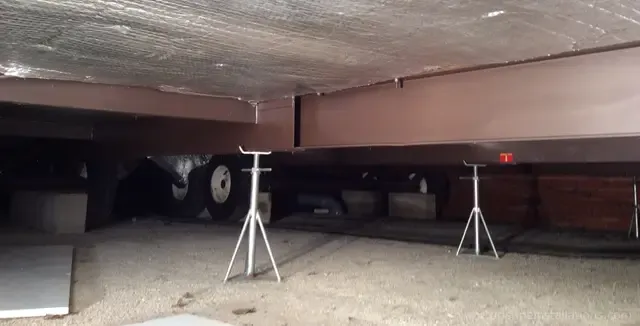
The absolute foundation of your park home is its chassis. Typically constructed from heavy-duty, rust-resistant galvanised steel, this framework consists of thick longitudinal beams running the entire length of the property. Horizontal outriggers and a sturdy angle ladder frame extend from these main beams to fully support the width of the timber build above.
This rigid steel skeleton is expertly engineered to withstand the immense stresses of transport from the manufacturing facility, whilst providing lifelong stability and strength once permanently sited on your park plot.
2. Wheels, Axles, and Support Jacks
A common point of confusion is the legal classification of park homes as 'mobile'. While they do indeed feature wheels and axles attached to the chassis, these are strictly temporary tools. They are designed exclusively for factory assembly, loading onto low-loader lorries, and the final, delicate manoeuvring onto your pitch.
Once the home is precisely positioned, the wheels are relieved of their duty. The true weight is borne by heavy-duty galvanised steel support jacks (sometimes referred to as axle stands). Placed at strategic load-bearing points and beneath the corners, these jacks are finely adjusted to ensure the home is perfectly level, transferring the structural weight securely to the concrete base below.
3. Floor Joists and Thermal Insulation
Directly above the steel chassis sits the timber sub-floor. Stress-graded timber floor joists are securely bolted to the steelwork, creating the solid platform for your interior flooring. Because the home is elevated, the floor is uniquely exposed to cold air circulating underneath.
To combat cold floors and meet rigorous BS 3632 thermal efficiency standards, thick insulation is fitted tightly between the timber joists. This insulation layer, often comprising rigid polystyrene blocks, mineral wool, or advanced foil-backed boards, is vital for keeping your home warm and cosy throughout the winter months, eliminating cold draughts from below.
4. The Arteries of the Home: Services and Pipework
The void between the timber joists also serves as the central nervous system for your home's utilities. This space safely houses all the essential services, including incoming mains water pipes, wastewater drainage systems, and the main electrical cabling that is routed throughout the property.
To prevent the nightmare of frozen pipes during harsh British winters, it is absolutely critical that all water supply pipework within this underfloor space is thoroughly and professionally lagged (insulated).
5. Skirting and The Importance of Ventilation
The physical gap between the ground and the chassis is typically enclosed by a decorative skirt, which provides a clean visual finish to the home. Modern skirting can be beautifully styled to mimic traditional brickwork, natural stone, or a smooth textured render.
Crucially, this skirting must never be completely sealed. Strategic ventilation grilles are a mandatory requirement. Constant, unobstructed airflow beneath the chassis is absolutely essential to prevent damp, condensation, and trapped moisture. Without this natural airflow, the steel chassis could become vulnerable to rust, and the timber floor joists could face the severe risk of damp and rot.
Final Thoughts for Owners
Understanding the anatomy beneath your park home highlights the importance of occasional, routine maintenance. Ensuring your ventilation grilles remain clear of leaves and debris, checking that pipe lagging remains intact before winter sets in, and occasionally having the chassis inspected for signs of corrosion will help ensure your home remains safe, warm, and structurally sound for decades to come.