
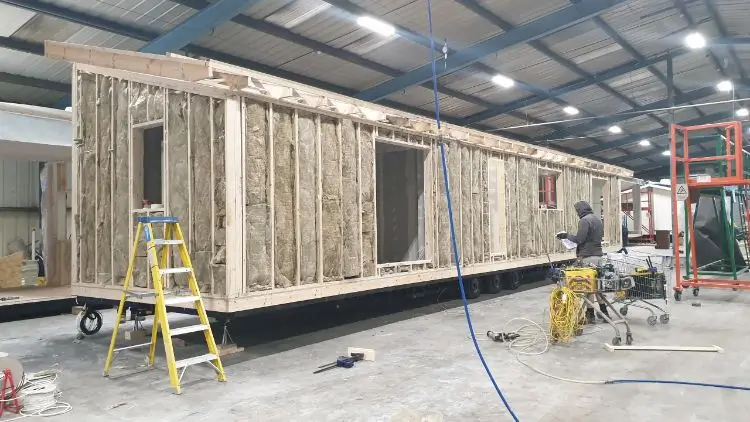
The UK park home industry has undergone a remarkable transformation over the last sixty years. What began as a post-war solution for affordable, temporary accommodation has evolved into a highly regulated, luxury manufacturing sector. Today, the modern residential park home is a feat of engineering—offering bespoke layouts, exceptional thermal efficiency, and a true community lifestyle.
Here is a look at how the UK park home manufacturing industry developed, the standards that shaped it, and the makers who built it.
The Early Pioneers and the Birth of a Standard
In the 1950s and early 1960s, the distinction between a touring caravan and a static residential home was blurred. People were living year-round in units designed primarily for summer holidays. Recognising the need for a dedicated residential standard, the British Standards Institution introduced BS 3632 in 1963. This was the turning point that officially separated permanent residential park homes from seasonal holiday accommodation (which is now governed by EN 1647).
The 1960s saw the establishment of some of the industry’s most enduring names. Stately-Albion, Europe’s oldest permanent park home manufacturer, began setting early benchmarks for quality. In 1965, David Pleszko founded Omar Mobile Homes in Suffolk. Omar would go on to become an industry giant, introducing innovative cavity wall insulation by 1967 and later launching iconic, long-standing models like the Colorado and the Heritage, which remain beloved mainstays on parks across the country.
Meanwhile, companies with roots in traditional caravan building, such as Willerby (with over 70 years of history), began expanding their expertise to cater to the growing demand for spacious, static living.
The Expansion of the Market (1970s–1990s)
As the concept of residential park living gained traction, particularly among those seeking a peaceful community lifestyle, the manufacturing landscape expanded rapidly. This era saw the rise of specialist builders who focused on refining layouts and improving structural integrity.
- Tingdene Homes became a major player, known for reliable, traditional park homes that helped establish the aesthetic of the classic British residential park.
- Pathfinder Homes, bringing decades of experience to the table, began pushing the boundaries of bespoke design, ensuring buyers didn't have to compromise on their individual lifestyles.
- Pemberton Park & Leisure Homes and ABI UK built formidable reputations, transitioning seamlessly between high-end holiday lodges and residential-specification homes.
- Wessex Unique Lodges & Park Homes carved out a niche for distinct, characterful designs.
Throughout this period, manufacturers like Atlas Leisure Homes, Carnaby, and Delta Caravans continually improved their offerings, focusing on sustainable resources and comfortable interiors. Bespoke family-run businesses also thrived; Lissett Homes began offering highly customised builds, while Manor Park Homes and Oakgrove catered to buyers wanting a flexible approach to design.
The Evolution of the BS 3632 Standard
The driving force behind the quality of these homes has been the continuous refinement of the BS 3632 standard. As manufacturers pushed for better materials, the standard evolved to mandate them.
1963: First Published
The original standard is introduced to differentiate permanent residential park homes from temporary holiday caravans, focusing on basic structural integrity.
2005: The Modern Shift
A major revision aimed at ensuring park homes were unequivocally suitable as permanent dwellings, updating structural, acoustic, and safety requirements.
2015: The Efficiency Leap
A landmark update that brought park homes closer to conventional housing standards, introducing significant improvements to energy efficiency, U-values, and reducing environmental footprints.
2023: The Sustainable Future
The most recent standard (superseding 2015). It mandates even stricter thermal transmittance (U-values of 0.3 for walls and 0.26 for floors), enhanced moisture control to prevent condensation, and advanced safety features.
The Contemporary Landscape: Luxury, Efficiency, and Choice
Today's market is incredibly diverse, characterised by a mix of historic heavyweights and innovative newcomers. The focus has shifted heavily toward luxury finishes, bespoke customisation, and cutting-edge eco-efficiency.
Prestige Homeseeker stands out as one of the largest manufacturers, offering a vast array of models to suit various budgets without sacrificing quality. Victory Leisure Homes and Regal bring modern, stylish, and highly practical living spaces to both the holiday and residential sectors.
We are also seeing a new wave of manufacturers focusing on highly specialised, modern builds:
- ECO Mobile Homes and Habitat Mobile Homes are pushing sustainable construction methods and contemporary garden lodge designs with on-site assembly options.
- Amobi specialises in bespoke homes designed to harmonise with their specific pitch surroundings, maximising river or countryside views.
- Harbur, Kingston, and Mulbery Park & Leisure Homes are earning strong reputations for high-end finishes, exceptional craftsmanship, and premium living experiences.
- Arronbrook and Country Homes continue to champion the bespoke, customer-first approach, using local suppliers and highly flexible layouts.
Preserving the Heritage
As the industry moves forward, there is a growing appreciation for its history. With hundreds of different models produced over the decades—from rare early builds to the latest high-tech lodges—the rich tapestry of UK park home manufacturing is something to be celebrated. Documenting these makers and cataloguing the diverse models they've produced ensures that the unique heritage of this sector is preserved for the communities that call them home.